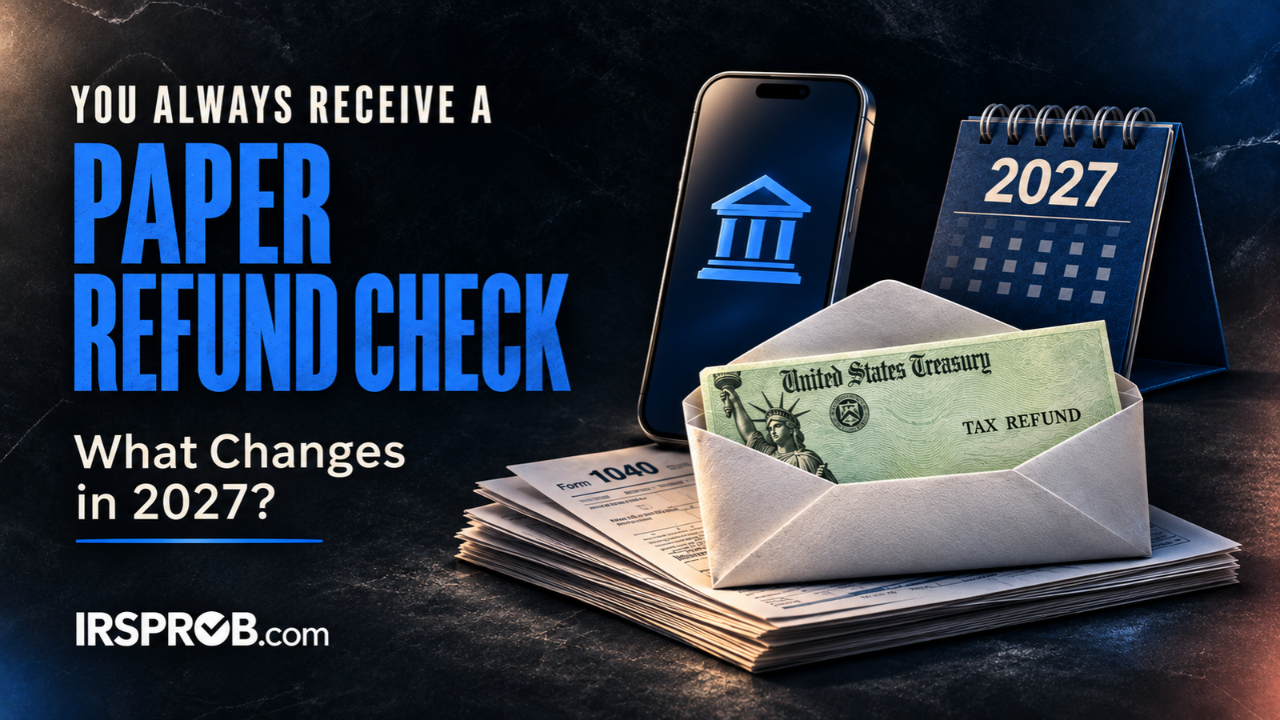
The IRS paper refund check phaseout may change how you receive your refund during the 2027 filing season.
Consider this situation.
You have received a paper refund check for years. You file your return, wait for the envelope, and deposit the check at your bank. It has always worked, so you expect the same thing to happen next year.
Then your tax preparer asks for a routing number and account number.
You do not use online banking. Maybe you recently closed your old account. Maybe you use a prepaid card or payment app instead. Now you are wondering whether the IRS will hold your refund or refuse to send it.
The IRS is moving most individual refunds to direct deposit and other electronic payment methods. Paper checks may still be available in limited situations. Your refund does not disappear because you do not have a traditional bank account, but you should plan before filing.
You also need to check every number carefully. If a refund goes to a closed, incorrect, or unsupported account, fixing the problem can take time.
The goal is not to panic. The goal is to choose and confirm a safe refund payment method before your return is filed.
The IRS Paper Refund Check Phaseout Is Already Underway
The change comes from Executive Order 14247. It directed the federal government to move payments, including tax refunds, toward electronic methods when the law allows it.
After September 30, 2025, the IRS generally stopped sending routine paper refund checks to individuals. Checks did not disappear completely. The IRS may still mail one when electronic payment is not available or an exception applies.
The IRS paper-check phaseout guidance explains that direct deposit is now the main refund method.
That distinction matters. “Phaseout” does not mean nobody can receive a check. It means you should not expect the IRS to mail one automatically just because it did so in the past.
Why the IRS Is Moving Toward Electronic Refunds
Direct deposit is usually faster than mail. It also lowers the chance that a check will be lost, stolen, changed, or returned because of an old address. Still, one wrong bank number can cause a delay.
The IRS is telling taxpayers to prepare early. Its guidance on how to prepare for the 2027 filing season recommends gathering bank routing and account numbers along with Forms W-2, Forms 1099, and other tax records.
What Should You Expect During the 2027 Filing Season?
If you expect a refund, be ready to provide direct-deposit information on the 2026 return you file in 2027. The change is mostly about how the IRS sends the money, not how you prepare the return.
If your bank information is missing, wrong, or rejected, the IRS may hold the refund and send a CP53E notice. Under current procedures, the notice explains how to add or update an account through your IRS Individual Online Account. If you qualify, you may also be able to request a paper-check exception.
What Information Do You Need for Direct Deposit?
Direct deposit normally requires:
- A routing number
- An account number
- The correct account type, such as checking or savings
- An eligible account that belongs to you
Do not rely on memory. Check the numbers with your bank or account provider.
Check the Routing Number
A routing number identifies your bank or provider. Ask which number to use for an IRS refund because some banks use different numbers for different transactions.
Check the Account Number
One wrong digit can cause the bank to reject the refund or send it to the wrong account. Review the number before signing and filing.
Confirm That the Account Accepts IRS Refunds
Some accounts accept paychecks but limit tax refunds or deposits with a different name. The rules vary by bank and account type.
Contact the provider before filing, especially if you use an online-only account, prepaid card, mobile app, or digital wallet.
What if You Do Not Have a Bank Account?
You still have options.
The IRS refund options page lists bank accounts, credit-union accounts, certain prepaid debit cards, payment apps, and digital wallets as possible choices. The account must have valid routing and account numbers and be able to accept the refund.
Bank or Credit-Union Accounts
Some banks and credit unions offer free or low-cost accounts. Check the fees, balance rules, and ID requirements before opening one.
Prepaid Debit Cards
A reloadable prepaid card may work if it has a routing number and account number that can receive an IRS refund.
A credit-card number is not a bank account number. The IRS does not allow a refund to be directed to a credit-card account.
Ask the card provider whether it accepts federal tax refunds and whether deposit limits apply.
Digital Wallets and Mobile Apps
Some digital wallets and mobile apps provide personal routing and account numbers. Others do not.
Receiving money from friends does not prove an app can accept a federal refund. Confirm the account details and deposit limits.
Limited Paper-Check Exceptions
Paper checks are still possible in limited situations, including some hardship, legal, or processing cases. This is not a general choice for everyone who prefers mail.
If you receive a CP53E notice, follow its steps for requesting an available exception. The CP53E phone line gives recorded information. It does not connect you with a representative, and you cannot submit bank information by phone.
Can You Deposit Your Refund Into Someone Else's Account?
Use an eligible account in your name or a joint account you own. For a joint return, the IRS allows the refund to go into either spouse's account or a joint account. The bank must also agree to accept it.
Ask whether the bank will accept a joint refund into an account held by only one spouse.
Do not use a friend's, relative's, or unrelated business account. A different name can cause the bank to reject the refund. If the money enters someone else's real account, getting it back can be difficult.
Never Send Your Refund to a Tax Preparer's Account
A tax preparer should not send your federal refund into the preparer's personal or business account.
Some refund products use a temporary account so the preparation fee can come out of your refund. Read the agreement, fees, and account details before saying yes.
IRSProb's article on fast refund promises explains why taxpayers should be careful when a preparer promises unusual speed or asks to control the refund.
Always review the routing number and account number shown on the return before signing it.
What if You Closed or Changed Your Bank Account?
Do not file using an old account and hope the bank will forward the money.
Replace old bank information before filing. If the return has not entered the IRS system yet, you may be able to call and ask the IRS to stop the deposit. It may not be able to do so.
Once the return enters the IRS system, you generally cannot change the bank information unless a CP53E notice opens that option in your online account.
If the closed bank rejects the deposit and sends it back, the IRS will provide the next steps. This can take longer than entering the right information before filing.
What if You Enter the Wrong Bank Information?
If the number fails the IRS validation check, the refund may be held and a CP53E notice may be issued.
If the bank rejects the deposit, the money should return to the IRS. The IRS may ask for updated information or issue the refund another way.
If the wrong number belongs to a real account and the bank accepts the deposit, contact the bank immediately. The IRS cannot simply pull the money from someone else's account. You may need to request a refund trace using Form 3911, depending on the facts and IRS instructions.
IRSProb's guide to IRS refund delays explains other reasons a refund may be held or delayed.
What Is a CP53E Notice?
The IRS may send a CP53E notice when your return shows a refund but the bank information is missing, wrong, or rejected.
You generally have 30 days from the date on the notice to add or update an eligible account through your IRS Individual Online Account. You may also be able to choose an available paper-check exception.
You generally get only one chance to add or update the bank information. Check every number before submitting it. If the bank rejects the updated deposit, the IRS says it will send a paper check.
Under current IRS guidance, if you do not respond and no other issue is holding the refund, the IRS generally sends a paper check six weeks after the notice date. You must then allow time for mail delivery.
Read the official CP53E notice instructions before acting. Do not follow bank-update instructions sent through an unexpected text message, email, or social-media account.
IRS employees generally cannot update your bank information by phone. The online update option becomes available after the notice is issued.
How to Check the Status of Your Refund
Use the official Where's My Refund? tool or your IRS Individual Online Account.
Keep the filed return, IRS notices, and records of calls with the bank.
IRSProb's guide to the IRS Online Account explains other information taxpayers can review before calling the IRS.
Watch for Refund and Direct-Deposit Scams
Scammers know that taxpayers are adjusting to new payment rules. They may send a message claiming the IRS needs your bank information immediately.
Do not send account numbers, passwords, or identity documents through an unexpected text, email, or social-media message. Go directly to IRS.gov or sign in to your IRS Individual Online Account using a trusted device.
An IRS IP PIN can help prevent someone from filing a federal return using your identity. IRSProb's guide on how to get an IP PIN before filing explains the enrollment and annual PIN process.
Your 2027 Refund Preparation Checklist
Before filing, confirm that:
- The routing number is correct.
- The account number is correct.
- The account is open and active.
- The account accepts federal tax refunds.
- The account is in your name, your spouse's name, or both when allowed.
- Any prepaid card or digital wallet provides valid personal banking details.
- The expected refund does not exceed an account deposit limit.
- Your current mailing address is on the return in case the IRS sends a notice.
- If possible, you have access to your IRS Individual Online Account in case you receive a bank-update notice.
- You saved a complete copy of the signed return.
Frequently Asked Questions
Has the IRS Completely Stopped Mailing Refund Checks?
No. The IRS is phasing out routine paper refund checks, but limited checks may still be issued when an exception applies or when an electronic refund cannot be completed.
Can I Receive a Refund Without a Traditional Bank Account?
Yes. Certain prepaid cards, payment apps, digital wallets, and mobile accounts may work if they provide valid routing and account numbers and accept IRS refunds.
Can My Refund Go to a Prepaid Debit Card?
Possibly. Confirm that the card is reloadable, provides personal banking details, accepts federal refunds, and can receive the expected amount.
Can I Use My Spouse's Bank Account?
For a joint return, the refund may be directed to one spouse's account or a joint account, but the bank may have its own rules. Confirm acceptance before filing.
Can I Change My Bank Information After Filing?
Usually not after the return has posted. An update may be available through an IRS Individual Online Account if the IRS issues a CP53E notice.
What Happens if the Bank Rejects My Refund?
The bank generally returns the money to the IRS. The IRS may issue a CP53E notice, request updated information, or issue the refund another way.
Will the IRS Text Me for My Bank Information?
Do not trust an unexpected message asking for financial information. Use IRS.gov and your official IRS account to verify what the IRS needs.
What to Do Before You File
The IRS paper refund check phaseout does not make your refund disappear if you do not use a traditional bank. It means you need to choose and check a valid payment method before filing.
Check the account ownership, routing number, account number, and deposit rules. If you receive a CP53E notice, follow the official instructions and respond within the time shown.
What matters most is what you do before filing. Checking the account now can help you avoid a preventable refund delay.
If your refund was sent to the wrong account, rejected by the bank, or held after an IRS notice, a CPA or tax attorney can help you review the return, notice, and next steps.
Need tax consultation? Contact us.
Visit IRSProbDisclaimer
This article is for general educational purposes only. It is not legal or tax advice. Refund procedures, electronic-payment options, bank rules, and available exceptions can change. Review current IRS guidance and speak with a licensed CPA or tax attorney about your situation.