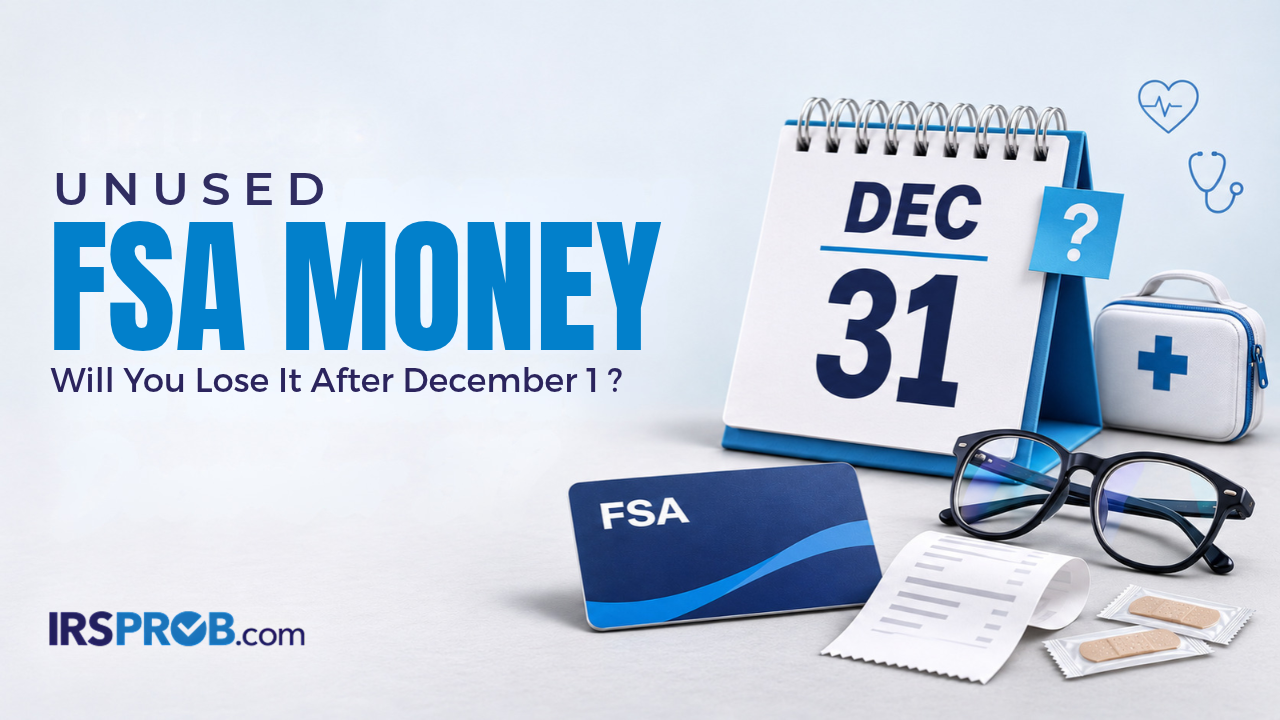
You sign in to your benefits account and see $700 still sitting in your health FSA.
A coworker tells you, “Spend it before December 31 or you will lose it.” You start looking at glasses, cold medicine, and anything else that might use the balance.
Before you rush, stop and check your plan.
Unused FSA money does not follow one deadline for every employee. Your employer may allow part of the balance to carry into the next plan year. The plan may offer a grace period instead. You may also have extra time to submit claims for expenses you already incurred.
Those options are not the same. A later claim deadline does not always give you more time to receive care or buy an eligible item. That is where people get caught.
The goal is to understand your plan’s rules, deadlines, and eligible expenses.
What Happens to Unused FSA Money After December 31?
Health Flexible Spending Accounts generally follow a use-it-or-lose-it rule. Money left after the plan’s deadlines may be forfeited.
December 31 is not a universal deadline. Plans may use another year-end date, allow a limited carryover, or provide a grace period.
The employer decides whether to offer either option. Federal rules do not require a carryover or grace period.
For plan years beginning in 2026, an employee may generally elect up to $3,400 in salary-reduction contributions. A plan may allow up to $680 to carry over, less than that amount, or nothing. For a calendar-year plan, up to $680 of unused 2026 funds may carry into 2027.
Do not rely on the federal maximum alone. Read your Summary Plan Description or contact the plan administrator.
First, Make Sure You Actually Have a Health FSA
“FSA” can describe different accounts with different rules.
Health FSA
A health FSA is an employer benefit for eligible medical expenses, commonly funded through pretax payroll deductions. It does not normally follow you to another job.
Limited-Purpose FSA
A limited-purpose FSA usually covers dental and vision expenses and may work alongside an HSA. Check the plan before using it for another medical bill.
Dependent Care FSA
A dependent care FSA helps pay certain care expenses while you work or look for work. It follows different rules. This article focuses on health FSAs.
Health Savings Account
An HSA is different. Eligible HSA money generally belongs to the account holder, stays in the account from year to year, and follows the owner after a job change.
Check the account name in your benefits portal. The IRS guidance on health FSAs and other tax-favored health plans explains the basic differences.
How the FSA Use-It-or-Lose-It Rule Works
You normally choose an annual health FSA amount during open enrollment. The employer then takes that amount from your pay over the plan year.
The full annual election is often available during coverage before every payroll deduction has been made. Unused money can be forfeited after the deadlines.
The employer generally cannot return the balance as cash or move it into another benefit.
The plan year matters. A June 30 plan year has different dates from a calendar-year plan.
Your Plan May Offer a Carryover or a Grace Period
A health FSA may offer a carryover or a grace period, but generally not both for the same plan year.
What Is an FSA Carryover?
An FSA carryover lets a limited amount of unused money remain available for eligible expenses in the following plan year.
For plan years beginning in 2026, the maximum permitted carryover is $680. That does not mean your plan must allow $680. Your employer may allow a smaller amount or no carryover.
The carryover normally does not reduce your new annual election.
What Is an FSA Grace Period?
An FSA grace period gives you more time after the plan year ends to incur eligible expenses using the prior year’s balance.
Federal guidance allows a grace period of up to two and a half months. A calendar-year plan could extend the expense period into March, but the employer may provide a shorter period.
Confirm the plan’s date in writing.
Can a Health FSA Offer Both?
A health FSA generally cannot offer both for the same plan year. The employer chooses which option, if either, is included.
A plan may still have a separate run-out period for claims.
A Run-Out Period Does Not Extend Your Coverage
An FSA run-out period is extra time to submit documents for an eligible expense that was already incurred during the coverage period.
Suppose your plan year ends December 31 and claims are due March 31. A December 20 dental receipt may still be submitted in February.
A run-out period alone would not cover a new dental visit in February. That visit would need to qualify under a grace period, an available carryover, or your new plan-year coverage.
For medical services, the date you receive the care generally determines when the expense is incurred. Paying ahead for care you will receive after the deadline generally does not make it eligible for the earlier coverage period.
Remember the difference:
| Plan feature | What it generally does |
|---|---|
| Carryover | Moves a limited balance into the next plan year |
| Grace period | Gives more time to incur new eligible expenses using the old balance |
| Run-out period | Gives more time to submit claims for expenses already incurred |
Ask the administrator to identify the last date to incur an expense and the last date to submit the claim.
A Simple Year-End FSA Example
Assume you have $900 left in a calendar-year health FSA on December 10.
Your plan allows a carryover of up to $680 and gives you until March 31 to submit claims for expenses incurred by December 31. You also have a $300 dental receipt from October that you never submitted.
If approved, the $300 reimbursement reduces the balance to $600. That amount may carry into the next plan year.
If you miss the claim deadline and have no other eligible claims, up to $680 may carry over and the remaining $220 may be forfeited.
If the plan offers a grace period instead, the old balance may pay eligible expenses incurred during that period. Money left after the deadlines may be lost.
The same balance can produce a different answer under another plan.
Which Expenses May Qualify for FSA Reimbursement?
Health FSA money generally reimburses qualified medical expenses incurred during coverage. The plan controls the claim process.
Common eligible categories may include:
- Medical copays and deductibles
- Prescription medicines
- Dental treatment
- Eye exams, glasses, and contact lenses
- Certain medical equipment and supplies
- Over-the-counter medicines
- Menstrual-care products
The IRS provides general medical and dental expense guidance. For FSA-specific rules, check Publication 969 and your written plan, including their treatment of over-the-counter medicines and menstrual-care products.
Some expenses depend on why they were purchased. A cost for a medical condition may qualify, while something bought only for general health may not.
The IRS has separate guidance addressing nutrition, wellness, and general health expenses. Ask the administrator before buying an item when eligibility is unclear.
Health insurance premiums and long-term care expenses generally cannot be reimbursed. Cosmetic products, gym memberships, and general wellness purchases also commonly cause problems.
Can You Use FSA Money for Your Spouse or Child?
A health FSA may reimburse eligible expenses for you, a spouse, tax dependents, and generally a child who has not reached age 27 by year-end, subject to the rules.
The family member may not need to be covered by your employer’s medical insurance. Confirm the relationship and expense before submitting a claim.
Do Not Buy Something Just to Empty the Account
Rushed spending can create a new problem. The item may not qualify, or the administrator may ask for more proof.
Start by looking for expenses you already paid. Check dental visits, prescriptions, copays, eye care, and eligible purchases that were never submitted.
Review care you actually need. Do not buy products you will not use simply to empty the account.
What Happens to Your FSA After Leaving a Job?
An unused balance is generally forfeited when employment and FSA coverage end, unless continuation coverage or another plan rule applies. You may still have time to submit claims for eligible expenses incurred before coverage ended.
Your last workday, coverage date, expense date, and claim deadline may differ.
In some situations, COBRA continuation may be available. Eligibility depends on the employer, plan, balance, and other facts. Continuing the FSA may require after-tax payments.
The Department of Labor provides general information about health coverage after leaving a job. Ask the plan administrator promptly because election and claim deadlines may apply.
How to Find Your Real Health FSA Deadline
Do not rely on a coworker’s plan or an old benefits email.
Ask these questions:
- What is the first and last day of my plan year?
- What is the final date to incur an eligible expense?
- Does the plan offer a carryover or a grace period?
- What is the maximum carryover allowed by this plan?
- What is the deadline to submit claims?
- What happens if my employment ends?
- Which documents are required for reimbursement?
Check the Summary Plan Description, benefits portal, or written plan guidance. Save the answer.
Documents and Receipts You Should Keep
The administrator may ask for the provider, patient, date, service, and amount.
Keep:
- Itemized receipts
- Explanation of Benefits statements
- Prescription records
- Provider invoices
- Letters of medical necessity when required
- Claim approvals and denials
- The plan’s deadline notice
Do not claim the same expense twice. An FSA-reimbursed amount generally cannot also be an itemized medical deduction.
Plan Next Year’s FSA Election More Carefully
For plan years beginning in 2027, the salary-reduction limit rises to $3,500 and the maximum permitted carryover rises to $700. For a calendar-year plan, the $700 maximum applies to unused 2027 funds carried into 2028. A plan may allow less or no carryover.
Review last year’s prescriptions, copays, dental work, vision care, and other predictable costs before choosing an amount.
Also look at how the election changes your paycheck. IRSProb’s discussions of employee benefit tax rules, year-end tax planning, and tax withholding and paycheck planning provide additional context.
Do not elect the maximum only because it is available. Use expected expenses, plan rules, and your household budget.
If you plan to contribute to an HSA next year, check whether continued general-purpose health FSA coverage could affect your eligibility. A limited-purpose FSA follows different rules.
Your Year-End FSA Checklist
Before the plan year ends:
- Confirm the account type.
- Check the current balance.
- Find the final date to incur expenses.
- Find the final date to submit claims.
- Confirm whether the plan offers a carryover or grace period.
- Gather old receipts and benefit statements.
- Check uncertain expenses before buying.
- Review what happens if you leave the job.
- Save written plan guidance.
- Choose next year’s election using expected expenses, not a guess.
Frequently Asked Questions
Does Every FSA Balance Expire on December 31?
No. The deadline depends on the plan year and whether the employer offers a carryover or grace period. A calendar-year plan may use December 31, but you must check the written plan.
Is a Run-Out Period the Same as a Grace Period?
No. A run-out period generally gives you more time to submit a claim for an earlier expense. A grace period gives you more time to incur a new eligible expense using the prior balance.
Can I Submit an Old Receipt After December 31?
Possibly. If the expense was incurred while you were covered and the claim is submitted before the run-out deadline, the plan may reimburse it.
Can Unused FSA Money Move to My New Employer?
Generally, no. A health FSA is tied to the employer’s plan. Ask whether you can submit earlier expenses or elect continuation coverage.
Can I Withdraw the Balance as Cash?
Generally, no. Health FSA money is normally available only to reimburse eligible medical expenses under the plan.
Is an FSA the Same as an HSA?
No. HSA money generally belongs to the account holder and carries forward. A health FSA is an employer-sponsored benefit with plan deadlines and possible forfeiture.
Can I Use FSA Money for Health Insurance Premiums?
Health insurance premiums generally are not eligible for reimbursement from a health FSA.
What if My Claim Is Denied?
Read the denial notice and the plan’s appeal instructions. Check whether documents are missing, the expense date falls outside coverage, or the item is not eligible. Follow the appeal deadline shown by the plan.
What to Do Next
Sign in to your FSA account and write down the balance. Then find the last day to incur expenses and the last day to submit claims.
If the portal is unclear, contact human resources or the plan administrator. Ask whether the plan uses a carryover, grace period, or run-out period. Get the answer in writing.
Someday is not a benefits deadline. What matters most is knowing the actual dates before the money is forfeited.
Need tax consultation? Contact us.
Visit IRSProbDisclaimer
This article is for informational purposes only and does not constitute legal or tax advice. Every tax and employee-benefit situation is unique. FSA deadlines, eligible expenses, carryover amounts, COBRA rights, and claim procedures depend on applicable law and the employer’s written plan. Consult the plan administrator, a licensed CPA, or a tax attorney before taking action.