You trusted someone to prepare your tax return.
Then something did not look right.
Maybe your refund went somewhere unexpected. Maybe the return included deductions or credits you never discussed. Or maybe an IRS notice arrived for a return you thought was handled correctly.
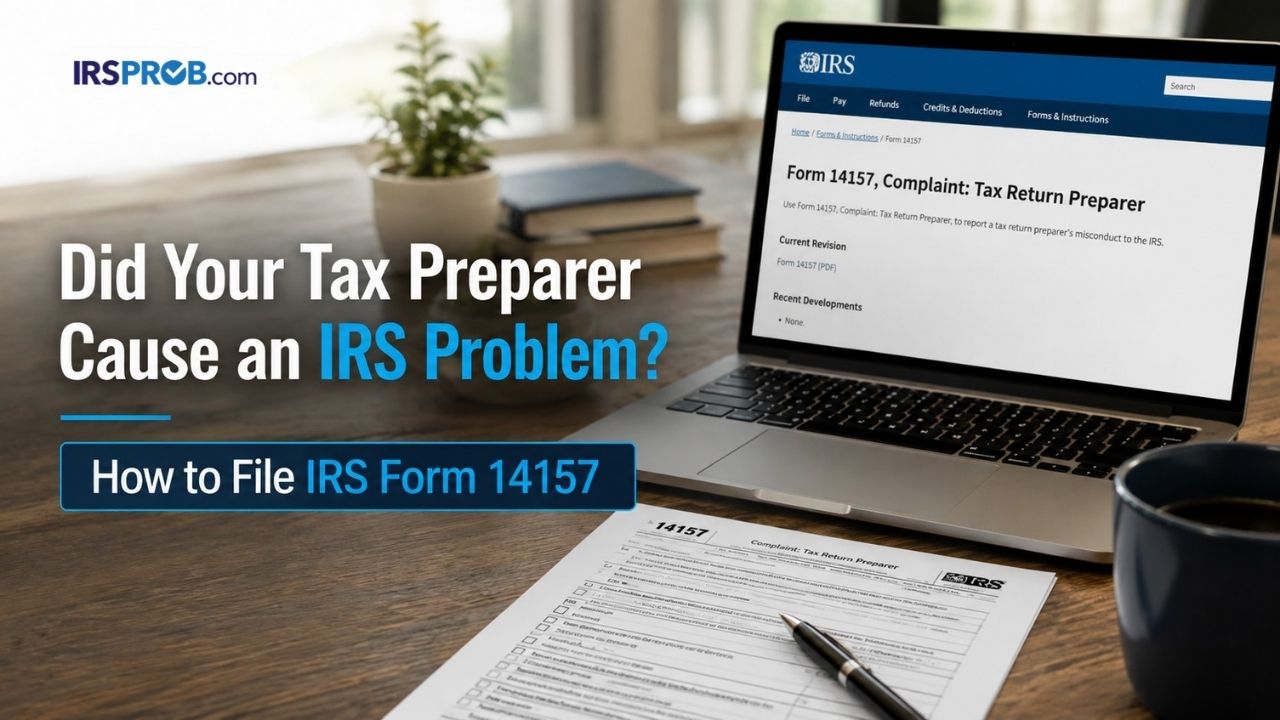
If you believe a paid preparer engaged in fraud or misconduct, IRS Form 14157 is used to report that preparer or tax preparation business to the IRS.
But reporting the preparer does not automatically fix whatever is wrong on your own tax account.
If a preparer filed or altered a Form 1040-series return without your knowledge or consent and you want the IRS to correct your account, Form 14157-A may also apply.
And if an IRS notice is already sitting in front of you, do not ignore it while you focus on the complaint.
Start with two questions:
What did the preparer do?
What now needs to be fixed with the IRS?
Those can be two separate problems.
- What IRS Form 14157 Does
- What Preparer Conduct Can You Report?
- Form 14157 vs. Form 14157-A
- Step 1: Review the Return
- Step 2: Gather Preparer Information
- Step 3: Save the Evidence
- Step 4: Complete Form 14157
- Step 5: Decide Whether Form 14157-A Applies
- Step 6: Send the Complaint Correctly
- Step 7: Deal With Your IRS Account
- Does Form 14157 Fix Your Return?
- Filed Without Permission
- Refund Theft or Diversion
- Identity Theft
- Ghost Preparers
- Other Tax Fraud
- How Old Can a Complaint Be?
- Are You Still Responsible?
- When to Consider Professional Help
- Frequently Asked Questions
IRS Form 14157: What It Does and What It Does Not Fix
IRS Form 14157, Return Preparer Complaint, is used to report suspected fraud or misconduct involving a tax return preparer or tax preparation business.
The IRS complaint process covers conduct such as refund theft, unauthorized filing, false claims, certain e-file violations, PTIN issues, and other improper preparer conduct.
Think of Form 14157 as the complaint against the preparer.
It does not automatically amend your return, remove a balance, stop an audit, erase penalties, or correct your IRS account.
If the preparer's conduct affected your return or tax account, you may need to address that problem separately.
Form 14157 reports suspected preparer misconduct. Additional steps may be necessary to correct your return, balance, refund, penalties, or other IRS account issues.
What Tax Preparer Conduct Can You Report?
Form 14157 is intended for suspected preparer fraud or misconduct.
An ordinary mistake or disagreement does not automatically establish misconduct, so start by identifying exactly what was filed and what happened.
Examples of conduct the IRS identifies in its preparer complaint process include:
- Diverting or stealing a refund
- Giving you a copy of a return that does not match what was filed
- Filing without your knowledge or authorization
- Adding false deductions, credits, income, withholding, or other information
- Using false or altered documents
- E-filing without properly obtaining taxpayer authorization
- Refusing to provide a copy of the return
- Failing to sign or include a required PTIN
- Misrepresenting professional credentials
- Agreeing to file a return but failing to do so
- Failing to remit certain tax payments entrusted to the preparer
Before filing a complaint, get a copy of what was actually filed if possible.
Compare it with what you gave the preparer and what you approved.
If the issue involves suspicious or questionable tax credit claims, compare the filed return carefully with the information you actually provided and authorized.
You can review the IRS's current process to report a tax return preparer.
IRS Form 14157 vs. Form 14157-A: Which One Do You Need?
These forms have different purposes.
Form 14157 Reports the Preparer
Form 14157 tells the IRS about suspected misconduct by the tax return preparer or preparation business.
Form 14157-A May Be Needed for Your Account
Form 14157-A, Tax Return Preparer Fraud or Misconduct Affidavit, is narrower.
It generally applies when both of these conditions are met:
- A preparer filed or altered a Form 1040-series return without your knowledge or consent.
- You are asking the IRS to make a change to your tax account.
That distinction matters.
Form 14157 reports what the preparer did. Form 14157-A may also be needed when that conduct affected your own return and you want the IRS to correct your account.
Form 14157 is the preparer complaint. Form 14157-A has a narrower account-correction role in qualifying Form 1040-series preparer misconduct cases.
IRS Form 14157: 7 Steps to Report a Bad Tax Preparer
Step 1: Review the Return and Identify What Looks Wrong
Compare the filed return with your W-2s, 1099s, business records, receipts, and other information you gave the preparer.
Check your filing status, dependents, income, deductions, credits, withholding, refund amount, and direct-deposit information.
If you have Form 8879 or another record showing what you authorized for e-filing, keep it with your records.
The goal is to identify what was actually filed and how it differs from what you provided or approved.
Step 2: Gather Information About the Preparer
Collect as much identifying information as you reasonably have available.
That may include:
- Preparer's name
- Business name
- Address
- Phone number
- Email address
- Website or social media
- PTIN or EFIN, if known
- Location where your return was prepared
- Amount you paid
- How you paid
- Tax years the preparer handled
Do not delay a complaint solely because you do not know every preparer identification number.
Provide as much accurate information as you have.
Step 3: Save the Evidence
Gather records that help explain what happened.
These may include:
- Tax return copies
- IRS notices
- Emails
- Text messages
- Engagement agreements
- Invoices
- Payment receipts
- Bank records
- Refund deposit information
- Screenshots
- Form 8879
- Documents originally given to the preparer
Keep your original records.
The stronger your documentation, the easier it is to show the IRS exactly what you are reporting.
Step 4: Complete IRS Form 14157
Form 14157 asks for information about the preparer, the affected tax periods, the type of complaint, payment information, and what happened.
Be specific.
If several tax years were affected, identify them.
If a refund was redirected, explain what you expected and what you discovered.
If false information appeared on the return, identify the item and explain why it was inaccurate or unauthorized.
You do not need to turn the complaint into a legal argument.
Give the IRS enough factual information to understand what happened.
Step 5: Decide Whether Form 14157-A Also Applies
Ask yourself:
- Did the preparer file a Form 1040-series return without my knowledge?
- Did the preparer alter my return without my consent?
- Am I asking the IRS to correct my account because of that conduct?
If the applicable requirements are met, Form 14157-A may also be part of the process.
Review the form carefully because supporting documentation may be needed.
Step 6: Send the Complaint to the Correct Place
Where you send the complaint depends on your situation.
If the complaint relates to an IRS notice or letter, current IRS guidance generally instructs taxpayers to mail:
- Form 14157
- Form 14157-A
- A copy of the IRS notice or letter
to the address shown on that notice.
Do not assume filing a preparer complaint automatically handles the deadline or response requirement on your IRS notice.
If you received IRS Letter 4733 or Letter 6623 concerning a suspected ghost preparer, follow the specific IRS instructions for those letters rather than automatically using the standard notice-related complaint procedure.
The IRS preparer-reporting process has a separate path for those letters.
If there is no IRS notice involved, follow the current IRS Form 14157 submission instructions or the IRS online preparer complaint process.
Keep copies of everything you submit.
Step 7: Deal With the IRS Problem on Your Own Account
This is the part people can overlook.
Reporting the preparer is not the finish line if your IRS account is still wrong.
You may still need to address:
- An incorrect return
- Missing income
- False deductions
- Improper credits
- A balance due
- Penalties
- Interest
- An audit
- A missing refund
- An unauthorized filing
- Multiple affected tax years
If the preparer's work led to an IRS audit letter, that examination still needs attention.
If the IRS is showing a balance through an IRS CP14 notice, review that issue separately.
The complaint and the tax problem under your name may need attention at the same time.
A preparer complaint does not automatically extend, cancel, or satisfy a response deadline shown on an IRS notice.
Does Filing IRS Form 14157 Fix Your Tax Return?
No, not automatically.
Form 14157 reports the preparer's conduct.
It does not guarantee that the IRS will change your account, remove tax, refund money, or eliminate penalties and interest.
Depending on what happened, you may need Form 14157-A, a response to an IRS notice, an amended filing, an examination response, or another IRS-directed process.
Keep the questions separate:
What should happen to the preparer?
What needs to happen to your return or IRS account?
The first does not automatically resolve the second.
What If Your Tax Preparer Filed Without Your Permission?
Unauthorized filing is one type of preparer misconduct identified by the IRS.
If possible, obtain a copy of the return that was actually filed.
Compare it with anything you reviewed, signed, or approved.
Keep Form 8879 if you have one because it may help establish what you authorized.
If the preparer filed or altered a Form 1040-series return without your knowledge or consent and you want an account change, review Form 14157-A carefully.
If an IRS notice is already involved, do not miss its deadline while gathering evidence.
What If Your Tax Preparer Stole or Redirected Your Refund?
Refund theft or diversion can also be reported through the IRS preparer complaint process.
Keep records showing:
- The refund you expected
- Bank information shown on your return
- Where the refund was deposited, if known
- Communications with the preparer
- Any refund-related payment arrangements
Do not assume filing a complaint will automatically result in immediate reimbursement.
The IRS still needs to review what happened and determine what steps apply to your account.
What If the Problem Is Identity Theft?
Tax preparer misconduct and identity theft can overlap, but they are not the same process.
For individual tax-related identity theft, the IRS may direct you to Form 14039, Identity Theft Affidavit.
However, not every identity-theft situation requires Form 14039.
If the IRS has already sent you an identity-verification notice, follow the instructions in that notice. The IRS specifically says many people who receive identity-verification letters should not automatically file Form 14039.
Businesses, trusts, estates, and tax-exempt organizations generally use Form 14039-B, Business Identity Theft Affidavit, for qualifying business identity-theft situations.
Form 14157 does not replace the IRS identity-theft process.
What About Ghost Preparers?
A ghost preparer is generally a paid preparer who refuses to sign the tax return or fails to include a required PTIN.
That is a major warning sign.
Ghost preparers may promise unusually large refunds, add deductions or credits a taxpayer does not qualify for, or disappear after filing the return.
If you receive IRS Letter 4733 or Letter 6623 because the IRS believes your return may have been prepared by a ghost preparer, use the special IRS reporting path for those letters.
If you paid someone to prepare the return, provide as much accurate information about that person as you can.
What If You Want to Report Other Tax Fraud?
Form 14157 is specifically connected to tax return preparer misconduct.
If you want to report suspected federal tax-law violations by another individual or business that are not primarily a preparer complaint, a different reporting process may apply, including Form 3949-A in certain situations.
Using the right form helps direct the information to the correct IRS process.
How Old Can a Tax Preparer Complaint Be?
Current IRS guidance says that, in general, the agency cannot act on preparer complaints involving federal tax matters that are more than three years old.
If you are currently being audited or investigated regarding something that occurred more than three years ago, the IRS says to share information about the preparer with the IRS employee handling your case.
So an older issue should not simply be ignored when it is tied to an active IRS matter.
Are You Still Responsible If Your Tax Preparer Caused the Problem?
Do not assume the answer is automatically no.
The preparer's conduct can matter, but filing Form 14157 does not automatically remove tax, penalties, or interest.
The IRS still needs to determine what the correct tax treatment should be.
Depending on the situation, you may need to correct the return, respond to an examination, explain what happened, or request separate relief when available.
If the problem created a balance, understanding IRS penalties and interest may also become part of dealing with the account.
The preparer's conduct matters.
So does what is currently sitting on your tax account.
When Should You Consider Professional Tax Help?
Professional help may be worth considering when:
- Several tax years are affected
- A return was filed without authorization
- An audit has started
- A substantial balance is involved
- A refund was redirected
- Important records are missing
- Identity theft may be involved
- Penalties or interest are growing
- You do not understand what the preparer actually filed
A complicated case may require separate steps for the preparer complaint and your IRS account.
Did a preparer problem lead to an IRS notice or audit?
Reporting the preparer may be only one part of the situation. Make sure you also understand what the IRS is asking you to do and which deadline applies to your account.
Review IRS Audit Letter GuidanceFrequently Asked Questions About IRS Form 14157
What is IRS Form 14157 used for?
IRS Form 14157 is used to report suspected fraud or misconduct involving a tax return preparer or tax preparation business.
Will IRS Form 14157 fix my tax return?
Not automatically. It reports the preparer. Separate steps may be required to correct your return or IRS account.
What is the difference between Form 14157 and Form 14157-A?
Form 14157 reports preparer misconduct. Form 14157-A applies in certain cases where a preparer filed or altered a Form 1040-series return without the taxpayer's knowledge or consent and the taxpayer is asking the IRS to change the account.
What if I already received an IRS notice?
Follow the notice carefully. Current IRS guidance generally directs taxpayers with notice-related preparer complaints to submit Forms 14157 and 14157-A with a copy of the notice to the address shown on that notice.
Letters 4733 and 6623 have a special IRS reporting process.
Can I report a ghost tax preparer?
Yes. Paid preparers generally must sign returns they prepare and include a valid PTIN when required.
Am I still responsible for taxes if my preparer caused the problem?
Potentially. Filing Form 14157 does not automatically erase a tax balance. The result depends on what was filed, what happened, and which correction or relief rules apply.