You plan to file as soon as filing season opens. Your records are organized and you expect a refund.
Then you hear that you can get an IP PIN to help stop someone else from filing a federal tax return using your Social Security number.
You decide to request one in December.
But when you visit the IRS website, the online IP PIN tool is unavailable for its annual maintenance period.
You did not miss a filing deadline, but you may have missed the easiest time to request the number before filing season.
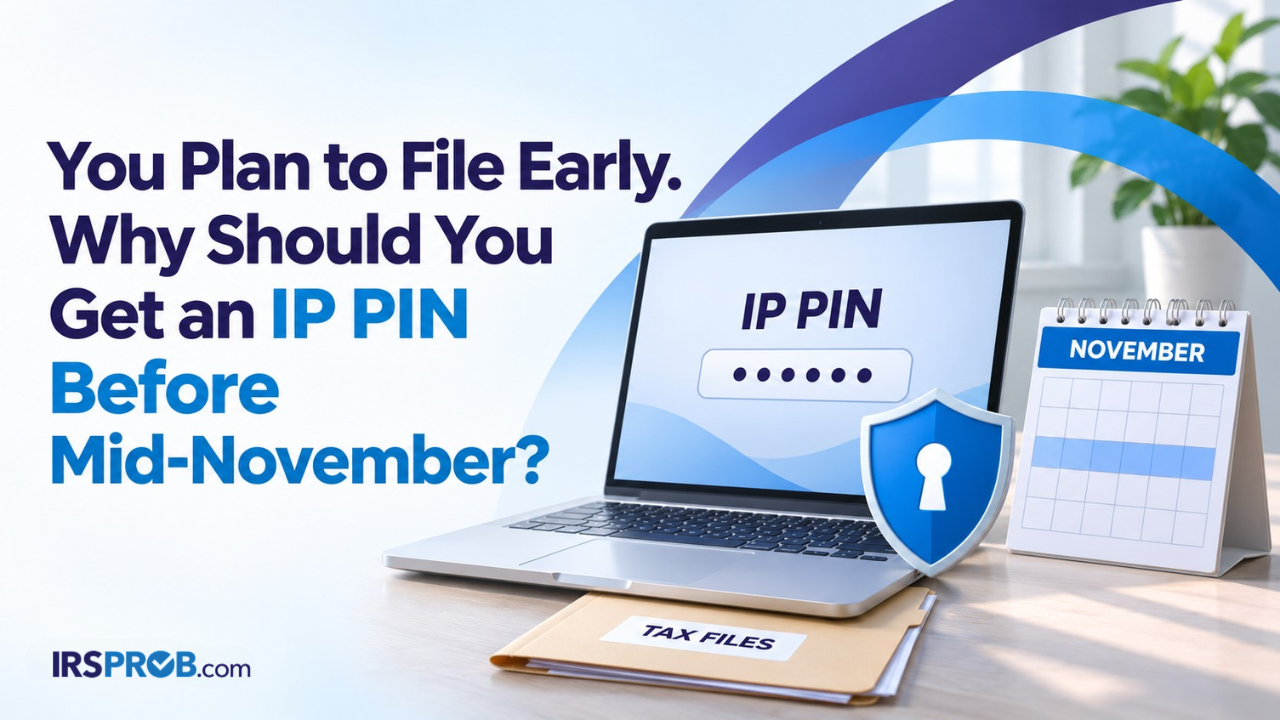
The IRS says its IP PIN tool is generally available from mid-January through mid-November. The exact maintenance dates can vary, so taxpayers who plan to file early should not wait until the holidays to look into it.
An IP PIN does not protect every part of your identity. Its main job is helping the IRS confirm that a federal return filed under your SSN or ITIN is really yours.
The goal is not to panic about identity theft. The goal is to take a practical step while the online tool is still available.
Why Get an IP PIN Before Mid-November?
Mid-November is not a legal deadline for requesting an IP PIN. It is a practical planning date.
The IRS normally takes the online tool down for annual maintenance around mid-November and reopens it around mid-January. Exact dates can change. That gap can interrupt your plans if your tax documents arrive quickly and you want to file early.
The safest approach is to check the official IRS IP PIN page before the maintenance period begins. Do not treat a social media post or an old article as the current schedule.
This Is Not a Tax-Filing Deadline
Missing the online window does not stop you from filing or create a penalty. It only means the fastest enrollment method may be unavailable. If the IRS already assigned you an IP PIN, you still generally need the correct current number when filing.
What an IRS IP PIN Actually Does
An Identity Protection Personal Identification Number is a six-digit number known only to you and the IRS. It adds another check to federal income tax returns filed using your SSN or ITIN.
If a thief has your personal information, the thief may try to file a false return and claim a refund. Once an IP PIN is assigned, an electronic return under that identity generally needs the correct number to be accepted.
What an IP PIN Does Not Protect
An IP PIN does not freeze your credit. It does not stop someone from opening a bank account, applying for a loan, using a stolen card, or impersonating you outside the federal tax system.
It also does not guarantee a faster refund. Your return may still be reviewed for mismatches, missing forms, credits, or other issues. Think of it as one lock on one important door, not a complete identity-protection plan.
Who Can Request an IP PIN?
You do not have to be a confirmed identity-theft victim. Anyone with an SSN or ITIN who completes the IRS identity-verification process can generally request one, including eligible taxpayers abroad and people who do not file every year.
A tax professional cannot enroll you. You must complete the identity verification yourself.
How to Get an IP PIN Online
The fastest method is usually the IRS online service. You can start through the Get an IP PIN page or access the feature through your IRS Online Account.
Sign in and verify your identity. Account setup may require identification documents. Once the number appears, save it securely. The IRS will not call, text, or email you to ask for it.
An IP PIN issued for 2026 cannot be used on a return filed in 2027. If you enroll now, retrieve your new 2027 IP PIN before filing your 2026 return next year. Continuous enrollment carries your participation into future years. One-time enrollment in 2026 ends at year-end. In every case, use the number valid for the calendar year in which you file, even for an older return.
For more help using IRS digital services, see our guide to the IRS mobile app and Online Account.
What If the Online Tool Is Already Unavailable?
You can wait for the tool to reopen, usually around mid-January. Check the official page for its current status.
An eligible person may also use Form 15227. It generally requires an SSN or ITIN, no existing IP PIN, telephone access, and adjusted gross income below $84,000 for an individual or $168,000 for married filing jointly on the latest return.
The IRS will call to verify your identity and, if approved, generally mail the number. Do not use Form 15227 merely to replace a lost IP PIN.
You may also verify your identity at a Taxpayer Assistance Center. Call 844-545-5640 for an appointment and ask what identification to bring.
Does Every Family Member Need a Separate IP PIN?
Not everyone must enroll. However, each person who has been assigned an IP PIN has their own number. The number is not shared across a household or tax return.
On a joint return, each spouse who has an IP PIN must enter that person’s own number. Do not use one spouse’s number for both people.
A dependent can also have an IP PIN. Someone age 18 or older may use their own online account. For a child under 18, a parent or guardian may need Form 15227 or an in-person appointment.
If a dependent has an IP PIN, you must include it on the applicable electronic Form 1040-series return, Form 2441, and Schedule EIC. A dependent’s IP PIN is not required on a paper return. Label each number carefully because mixing them up can cause rejection.
What Happens When You File?
Enter the current number in your tax software or give it only to a trusted preparer who needs it.
The IRS generally rejects an electronic return with a missing or wrong IP PIN. That does not prove identity theft. The number may be mistyped, omitted, or assigned to the wrong family member. Review the rejection and correct the return when appropriate.
A paper return with a missing or incorrect number may face identity checks and longer processing.
You also use the current calendar year’s IP PIN when filing a late prior-year return or an amended return. Do not use the number that was issued for the tax year printed at the top of the old return. An IP PIN is not entered on Form 4868, and it is not used on a state income tax return.
What If You Lost Your IP PIN?
Start by checking your IRS Online Account or the IRS app. The IRS says online retrieval is the fastest method for many taxpayers.
If you cannot retrieve it online, review the IRS instructions for a lost IP PIN. You may call 800-908-4490 for help. After verifying your identity, the IRS says it will mail your IP PIN to the address on file within 21 days when mail reissue is available.
Mail reissue is not always available, including during year-end maintenance and for certain first-time voluntary enrollments. A parent or guardian must call for mail reissue of a lost IP PIN belonging to someone under 18 because a minor cannot retrieve it online.
Do not file Form 15227 just because you lost an existing number. That form is for eligible people who do not already have an IP PIN.
Does an Exposed SSN Mean You Should File Form 14039?
Not automatically.
If your SSN appeared in a breach or you gave information to a suspicious sender, take protective steps. Exposure alone does not prove a tax return was filed in your name.
Form 14039, Identity Theft Affidavit, is for specific tax identity-theft situations, such as an IRS notice about an unknown return or a rejection showing a return was already filed under your SSN.
Do not send it merely because you are worried. Follow its instructions and use one submission method. Certain dependent disputes involving a parent or guardian are not tax identity theft for this form.
If you received a suspicious text or link, our guide to protecting your tax information after a suspicious message explains additional steps. You can also review our broader guide to tax identity theft protection.
How to Protect Your IP PIN
Treat the number like sensitive tax information.
- Store it in a secure password manager or protected tax file.
- Share it only with a trusted tax professional who needs it.
- Never provide it in response to an unexpected call, email, or text.
- Label each family member’s number carefully.
- Destroy unneeded paper copies securely.
- Retrieve the new number before preparing each year’s return.
If someone asks for your IP PIN while claiming to be the IRS, stop. The IRS says it will not contact you by phone, email, or text to request the number.
What to Do Next Before Mid-November
- Visit the official IRS IP PIN page and confirm that the tool is available.
- Decide whether continuous or one-time enrollment fits your situation.
- Complete identity verification before the maintenance window begins.
- Save the number securely and tell your preparer that you have one.
- Check whether your spouse or dependents have separate IP PINs.
- Collect Forms W-2, 1099, and other records before filing.
Do not rush a return merely to beat a thief. Filing early can help, but filing an incomplete or inaccurate return creates a different problem. Wait until you have the required tax documents and verify the numbers before submitting anything.
Frequently Asked Questions
Is mid-November the legal deadline to get an IP PIN?
No. It is a practical planning point because the online tool generally closes for annual maintenance around mid-November and reopens around mid-January. Check the IRS website for the exact status.
Does an IP PIN cost money?
No. The IRS does not charge a fee to request one.
Do I need to be an identity-theft victim?
No. Eligible taxpayers can voluntarily request an IP PIN after completing identity verification.
Will an IP PIN make my refund arrive faster?
Not necessarily. It helps verify identity, but it does not bypass other return reviews.
Does my spouse use my IP PIN on a joint return?
No. Each spouse who has an IP PIN must use their own six-digit number.
Can my child get an IP PIN?
Yes, subject to the IRS identity-verification process. The request method can depend on the child’s age and ability to create an online account.
Can my tax preparer request it for me?
No. The taxpayer must complete the request and identity verification. You may then share the number with a trusted preparer for filing.
Do I use last year’s number?
No. The IRS issues a new number for each calendar year. Use the current number for returns filed during that year, including late and amended federal returns.
Can I opt out later?
If you joined voluntarily and were not a confirmed tax identity-theft victim, you may be able to opt out online or by phone. One-time enrollment generally ends automatically at year-end. After opting out, allow up to 72 hours before electronically filing without an IP PIN or enrolling again.
Where can I get more help?
Start with the IRS IP PIN frequently asked questions. For broader tax-problem questions, visit the IRSProb tax problems FAQ.
Guidance reviewed November 6, 2026.
Need tax consultation? Contact us.
Speak with IRSProb about your tax questions. Call 214-214-3000.
Visit IRSProb.comDisclaimer: This article is for informational purposes only and does not constitute legal or tax advice. Every tax situation is unique. Consult a licensed CPA or tax attorney before taking action.