That IRS envelope can stop a normal day cold, especially when it says you have a balance.
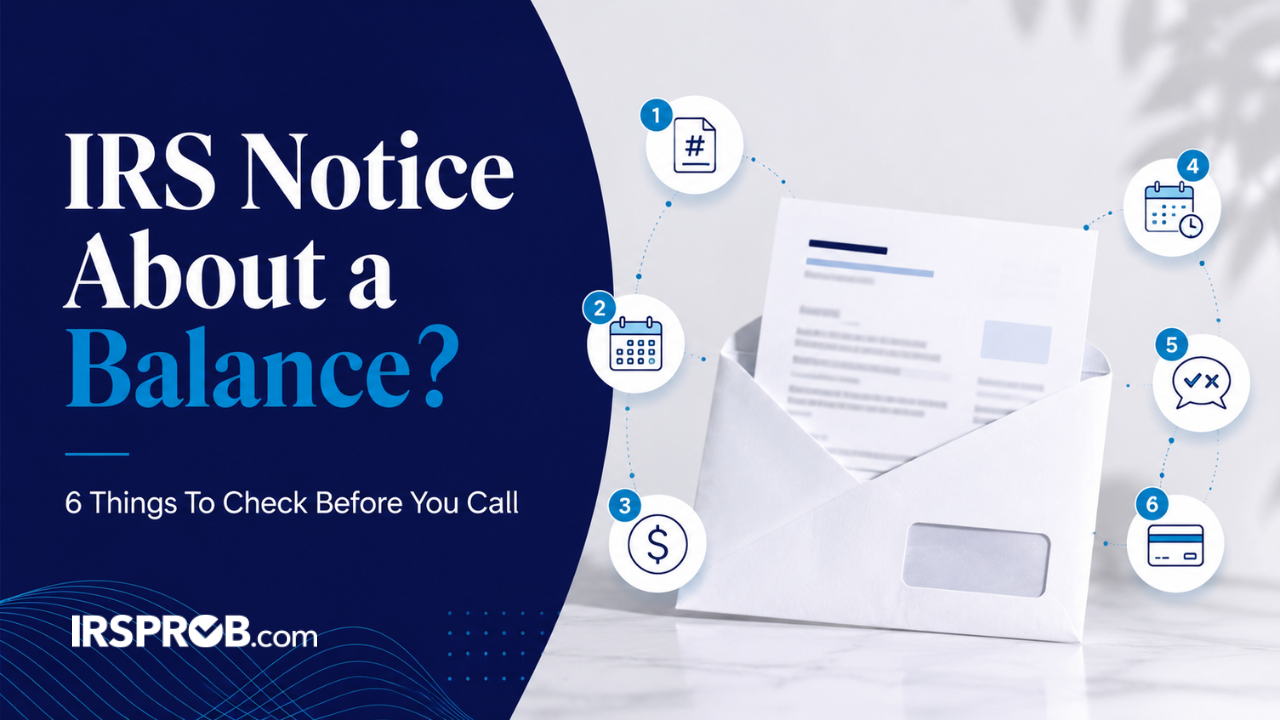
Before you call, slow down and read the notice all the way through. An IRS notice about a balance will usually show the notice number, tax year, amount, deadline or due date, and what the IRS wants you to do next.
The notice may be right. It may need a closer look. Either way, calling before you understand the letter can make the conversation more confusing and may lead to a rushed payment decision.
Start with the facts. Then decide the next step.
- What an IRS Notice About a Balance Usually Means
- Check 1: Confirm the Notice Number
- Check 2: Match the Tax Year and Amount
- Check 3: Read the Deadline Before You Decide
- Check 4: Decide Whether You Agree or Disagree
- Check 5: Review Payment Options Before You Promise Anything
- Check 6: Know When To Get IRS Help Before You Call
- What Not To Do After Getting a Balance Notice
- How IRSProb.com Can Help
- Frequently Asked Questions
What an IRS Notice About a Balance Usually Means
An IRS notice about a balance usually means the IRS believes there is an amount due for a specific tax year or account issue.
That does not mean you should panic.
It also does not mean you should assume the notice is automatically right or wrong.
IRS notices can involve different issues. Some notices are about a balance. Others may involve a changed return, missing information, identity verification, or a correction the IRS made.
Some notices are not bills, so do not treat every IRS letter like a payment demand.
That distinction matters.
Before you call, take a few minutes to understand what kind of notice you received and what the IRS is asking you to do. IRSProb.com also has more information in its IRS notices resources.
The notice number, tax year, amount, deadline, and instructions can help you understand what the IRS is asking for before you call or pay.
Check 1: Confirm the Notice Number
Start with the notice number.
Most IRS letters and notices include a CP or LTR number, often near the top or right side of the letter. That number matters because different notices can mean very different things.
A CP14, CP501, CP503, CP504, or another balance-related notice may require a different response than a notice asking for identity verification or missing information.
Not all balance notices are at the same stage either. Some are early balance notices. Others may include later collection language or stronger warnings. The notice number helps you understand where you are.
If the notice looks suspicious, do not call a random number without checking first. Use the IRS page on understanding your IRS notice or letter, sign in to your IRS Online Account when appropriate, or call the IRS directly at a verified IRS number.
Do not call with only the amount in mind.
Know the notice number first.
Check 2: Match the Tax Year and Amount
Next, look at the tax year.
This is where people sometimes get caught. A notice may relate to a prior year, not the return you just filed.
Compare the notice with your own records. Look at your filed tax return, payment confirmations, withholding, estimated payments, and any prior IRS letters.
If you already paid, do not assume you need to pay again. Find your proof first. That may include a bank record, IRS Direct Pay confirmation, EFTPS record, canceled check, or IRS Online Account information.
The Taxpayer Advocate Service also offers guidance on what to do if you receive a balance due notice for taxes you believe you already paid.
If the amount does not match your records, write down the difference before you call.
The goal is not to argue. The goal is to know what you are asking about.
Check 3: Read the Deadline Before You Decide
Every IRS notice should be read with the deadline in mind.
Some notices ask for payment. Some ask for a response. Some explain changes and give you a time limit if you disagree.
Do not ignore the date.
Taking action on time may help limit additional penalties or interest, depending on the situation. It may also help protect your response rights if the notice gives you a deadline to dispute something.
If penalties or interest are already part of the balance, IRSProb.com’s guide on IRS penalties and interest may help explain why timing matters.
If the deadline is close, do not wait until the last day to figure out what the notice means.
Someday is not a tax deadline.
A deadline may affect payment timing, response rights, or how quickly additional penalties and interest may continue to build.
Check 4: Decide Whether You Agree or Disagree
Before calling the IRS, decide whether you agree with the notice, disagree with it, or simply need more information.
If you agree with the notice, the next question may be whether you can pay in full or need to review payment options.
If you disagree, gather your records before responding. Do not rely on memory alone.
If the notice says the IRS changed your return, compare the change with the return you filed. If the notice says a payment was not received, gather payment proof. If the notice shows a balance you do not understand, check your IRS account or tax transcript if needed.
Calling without records can turn a simple issue into a confusing conversation.
Check 5: Review Payment Options Before You Promise Anything
If the notice is correct and you cannot pay in full, do not make a payment promise just to get off the phone.
A payment plan may be available for some taxpayers. Depending on the situation, the IRS may offer short-term or long-term payment options.
But the monthly amount still needs to be realistic.
A payment you cannot keep may create a new problem later. Before agreeing to anything, look at your income, monthly expenses, current tax obligations, and whether all required returns are filed.
Even with a payment plan, interest and some penalties may continue until the balance is paid in full.
You may also want to review official IRS information about IRS payment plans and the IRS Online Payment Agreement Application before you call so you understand the basic options.
IRSProb.com also has a guide on common IRS payment plan mistakes to review before agreeing to something you may not be able to keep.
The best payment option is not always the fastest one. It is the one that fits your actual situation.
A rushed payment agreement can create more pressure later if the monthly amount does not fit your real budget or current tax obligations.
Check 6: Know When To Get IRS Help Before You Call
Sometimes it makes sense to get IRS help before calling.
That may be true if the notice does not make sense, the amount looks wrong, or you believe you already paid.
It may also be true if you cannot pay in full, received more than one notice, are self-employed, own a business, have missing tax returns, or are worried about agreeing to the wrong payment option.
The Taxpayer Advocate Service also has information for taxpayers who need help resolving a balance due.
Professional help does not mean someone can promise a result. It means someone can review the notice, compare it with the facts, and help you understand what option may fit.
If your issue involves more than a simple payment question, IRSProb.com’s IRS tax resolution resources may help you understand what should be reviewed before choosing a path.
Do not guess your way through it.
What Not To Do After Getting a Balance Notice
Do not throw the notice away.
Do not call before reading it.
Do not call a suspicious number without verifying the notice.
Do not assume the amount is correct without checking.
Do not assume the amount is wrong without records.
Do not agree to a payment you cannot afford.
Do not miss the deadline because you were overwhelmed.
And do not wait for the next notice before taking the first one seriously.
Most people do not panic because of one notice. They panic because they do not know what it means.
The fix starts with understanding the letter.
How IRSProb.com Can Help
IRSProb.com helps taxpayers review IRS notices, tax balances, payment problems, and possible tax resolution options.
If you received an IRS notice about a balance, IRSProb.com can help you slow down and review the details before you respond.
That may include identifying the notice, checking the tax year, reviewing the amount, comparing the notice with your records, and discussing payment or resolution options if you cannot pay in full.
The goal is not to make a promise the facts do not support.
The goal is to help you understand what the IRS is asking for and what step may make sense next.
If you received an IRS notice about a balance and do not know what to do next, IRSProb.com can help you review the notice, understand what the IRS is asking for, and decide what step may fit your situation.
Need help reviewing an IRS notice about a balance?
Visit IRSProb.com or call 214-214-3000.
Request a Free Tax ConsultationFrequently Asked Questions
What should I do first if I get an IRS notice about a balance?
Read the full notice before calling or paying. Check the notice number, tax year, amount, deadline, and instructions. Then compare the notice with your own records.
Does an IRS balance notice always mean the amount is correct?
Not always. The notice may be correct, but it should still be checked. Compare it with your return, payment records, withholding, estimated payments, and IRS account information.
Should I call the IRS right away?
Not before reading the notice. It is usually better to understand the notice number, tax year, amount, and deadline first. If you call, have the notice and your records in front of you.
If the notice looks suspicious, verify the notice and use an official IRS contact number instead of calling a random number printed on questionable mail.
What if I cannot pay the full amount on the notice?
You may have payment options, depending on your situation. Review the amount, your budget, and whether you can keep up with current taxes before agreeing to a plan.
Can IRSProb.com help me understand the notice?
Yes. IRSProb.com can help review the notice, explain what the IRS appears to be asking for, and help you understand possible next steps based on your situation.