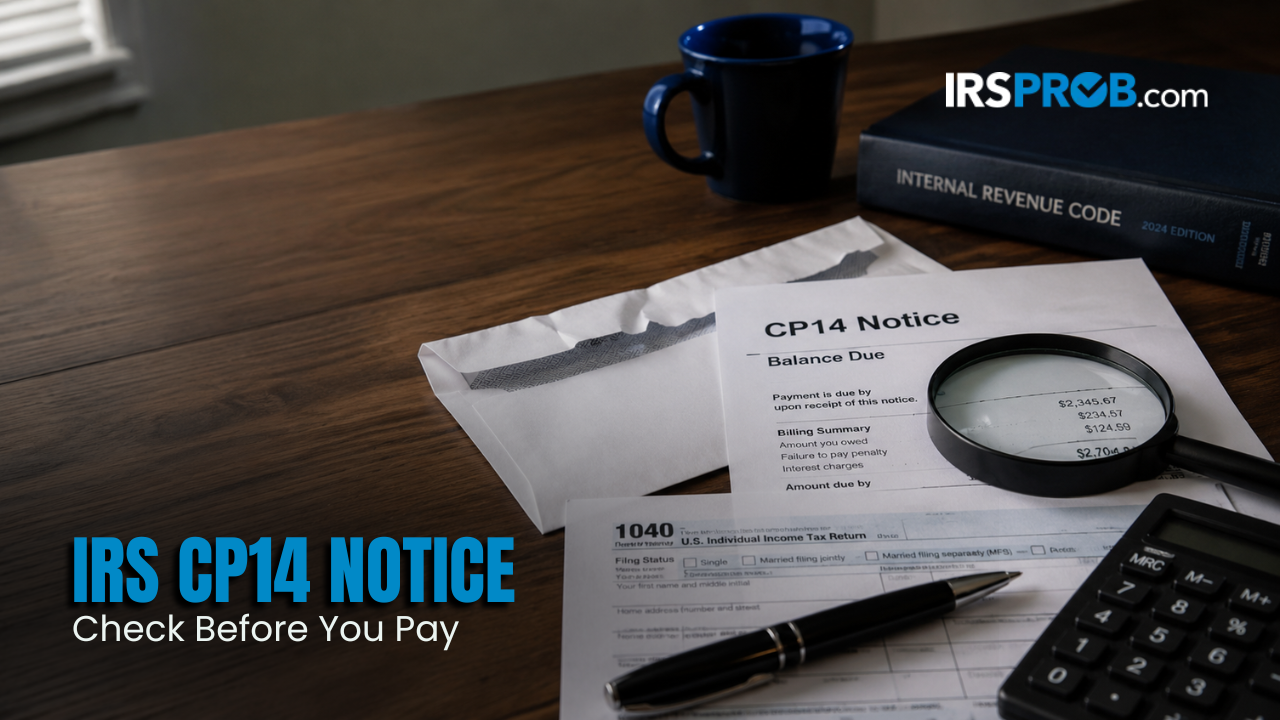
A CP14 notice is one of those letters people tend to set on the counter and avoid.
Not because they do not care.
Usually, it is because they open it, see a balance due, and immediately feel stuck.
Maybe the amount looks wrong. Maybe they thought they already paid. Maybe they know they cannot pay the whole thing right now. So the notice sits there while the stress keeps building.
I’m Randy Martin, CPA, and I help good people solve IRS problems before they turn into bigger ones.
An IRS CP14 Notice generally means the IRS believes there is unpaid tax on your account. That does not mean you should panic. It also does not mean you should ignore it.
What matters most is what you do next.
Before you pay, call, or put it aside for later, slow down and look at the details. Check the tax year. Compare the balance with your return. Look for any payments you already made. If something does not match, that distinction matters.
And if the amount is right but you cannot pay it all at once, do not assume you are out of options.
This guide walks through what an IRS CP14 Notice means, what to check first, what to do if it looks wrong, and what steps may help if paying in full is not possible.
- What Is an IRS CP14 Notice?
- Why Did You Receive an IRS CP14 Notice?
- What To Check Before You Pay or Respond
- What If the IRS CP14 Notice Looks Wrong?
- What If You Already Paid the Balance?
- What If You Cannot Pay the Full Amount?
- Common Mistakes To Avoid After Receiving a CP14 Notice
- What To Do Next After Receiving an IRS CP14 Notice
- When To Get Help With an IRS CP14 Notice
- IRS CP14 Notice Help From IRSProb
- FAQ About IRS CP14 Notices
What Is an IRS CP14 Notice?
An IRS CP14 Notice is a balance due notice.
In plain English, the IRS is saying it believes you owe money on unpaid taxes. The notice should explain the amount due, the tax year involved, and how the IRS says you can pay.
For many taxpayers, this notice comes after a return has been filed and processed. It may involve a balance that was not paid with the return, a payment that has not posted yet, or added penalties and interest.
The notice matters, but it is not the time to panic. It is the time to verify.
A CP14 notice does not automatically mean every detail is correct. It means the IRS records show a balance due. Your next step is to review the notice against your own records.
Why Did You Receive an IRS CP14 Notice?
There are several reasons a CP14 notice may show up.
You may have filed a return with a balance due and did not pay the full amount. You may have made a payment that has not posted, has not been processed yet, or does not appear where you expected it. The IRS may have added penalties or interest.
Self-employed taxpayers may also be caught off guard if estimated tax payments were too low during the year.
That is where people get caught.
They assume the notice is either completely right or completely wrong. Sometimes it is one of those. Sometimes it is more complicated.
The safest first step is to compare the notice against your own records.
What To Check Before You Pay or Respond
Start with the tax year.
Make sure the notice is for the year you think it is. A lot of confusion starts when a taxpayer assumes the notice is about the most recent return, but the IRS is looking at a different year.
Next, check the balance.
Compare the amount on the notice with your filed return, your payment records, and your bank records. If you paid electronically, look for the confirmation number. If you mailed a check, look for proof that it cleared.
Then look at penalties and interest.
A CP14 notice may include more than the original tax. It may include added charges. That does not automatically mean the notice is wrong, but you need to understand what the IRS is counting.
If penalties and interest are part of the issue, you may also want to read IRSProb’s guide on IRS penalties and interest.
You may also be able to review your balance, payment history, digital notices, and payment plan information through your IRS Online Account.
Finally, check the due date.
That date matters. Waiting too long can make the issue harder to handle.
- Tax year or tax period
- Balance due
- Payment history
- Penalties and interest
- Due date
- IRS instructions for paying or disputing the notice
What If the IRS CP14 Notice Looks Wrong?
If the notice looks wrong, do not ignore it.
That is one of the biggest mistakes people make. They see an amount they disagree with and assume they can just wait for the IRS to fix it.
Maybe they will. Maybe they will not.
If you disagree with the CP14 notice, gather your paperwork before responding. The IRS gives general guidance on understanding your IRS notice or letter, including reviewing the notice and following the instructions it provides.
That may include:
- The CP14 notice
- Your filed tax return
- Bank records
- Payment confirmations
- Canceled checks
- Amended return documents, if applicable
Do not call empty-handed. Do not guess. Have the records in front of you.
The point is simple. If the IRS has one set of records and you have another, you need documentation to show what happened.
What If You Already Paid the Balance?
This happens more often than people think.
A taxpayer makes a payment, then later receives a notice saying they still owe. That can happen because of timing, processing delays, or a mismatch in how the payment was made or recorded.
The Taxpayer Advocate Service has guidance on what to do if you receive an IRS balance due notice for taxes you have already paid.
If you already paid, do not pay again without checking the details.
Find the payment date, amount, method, and confirmation number. Then compare it to the tax year and balance shown on the notice.
If something does not match, that distinction matters.
What If You Cannot Pay the Full Amount?
If the CP14 balance is correct but you cannot pay the full amount, do not let that stop you from taking action.
Not being able to pay in full does not mean the only option is silence.
Depending on your situation, possible next steps may include paying what you can, requesting a payment plan, or reviewing whether another tax resolution option may be available based on your situation.
The IRS provides information about payment plans and installment agreements. IRSProb also helps taxpayers understand whether an installment agreement may fit their situation.
A payment plan can help some taxpayers spread payments over time. That does not mean penalties and interest automatically disappear. It means you may have a structured way to deal with the balance instead of letting the problem sit.
If you cannot afford payments at all, a broader hardship review may be needed. IRSProb’s guide on the IRS hardship program may help you understand the basic idea.
The key is to get clear before the notice turns into a bigger collection issue.
Silence can make the situation harder. If the balance is correct, look at payment options before the problem grows.
Common Mistakes To Avoid After Receiving a CP14 Notice
Ignoring the notice
That may feel easier for a few days, but it usually does not make the problem go away.
Assuming the IRS is always right
The IRS may be right. But payments can be missed, delayed, or not reflected the way you expected. Review the notice before you accept the balance as final.
Paying before checking your records
If the amount is correct and you can pay, that may be fine. But if something looks off, slow down and verify first.
Waiting until more notices arrive
Someday is not a tax deadline.
The longer you wait, the more stressful the situation can become.
What To Do Next After Receiving an IRS CP14 Notice
Start simple.
Read the notice from top to bottom. Confirm the tax year. Review the balance. Check your payment records. Look at the due date. Decide whether the notice appears correct.
If it looks wrong, gather proof before you respond.
If it looks right but you cannot pay in full, get clear on your options. Do not assume there is only one way forward.
The IRS offers several payment options, but the right next step depends on your facts.
The goal is not to panic. The goal is to understand what stage you are in.
When To Get Help With an IRS CP14 Notice
You may want help if the balance is more than you can pay, if the notice does not match your records, or if you have already received more than one IRS notice.
You may also want help if you are self-employed, have old tax balances, have unfiled returns, or do not understand why the IRS says you owe.
If you are in Texas and need help understanding your options, IRSProb’s guide on IRS tax relief in Texas may also be useful.
There is no shame in needing help with an IRS notice.
Tax problems get harder when people guess.
IRS CP14 Notice Help From IRSProb
If you received an IRS CP14 Notice and are not sure what to do next, IRSProb can help you review the notice, understand the balance, and look at possible next steps.
You do not have to figure it out alone.
Whether the notice looks wrong, the amount is more than you expected, or you cannot pay in full, the next step is clarity.
Need help understanding a CP14 notice?
Call IRSProb at 214-214-3000 or visit IRSProb.com.
Request a Free Tax ConsultationFAQ About IRS CP14 Notices
What does an IRS CP14 Notice mean?
An IRS CP14 Notice generally means the IRS believes you owe money on unpaid taxes. The notice should explain the amount due and how to pay it.
Is a CP14 notice the same as a bill?
Yes. It is a balance due notice. It is the IRS telling you that its records show unpaid tax.
What if I disagree with the CP14 notice?
Review your records first. Gather your return, payment proof, bank records, and any confirmation numbers before responding.
What if I cannot pay the CP14 balance in full?
You may still have options. Depending on your situation, a payment plan or another resolution path may be available.
Should I ignore a CP14 notice if I cannot pay right now?
No. If you cannot pay in full, it is still important to review the notice and understand your options.