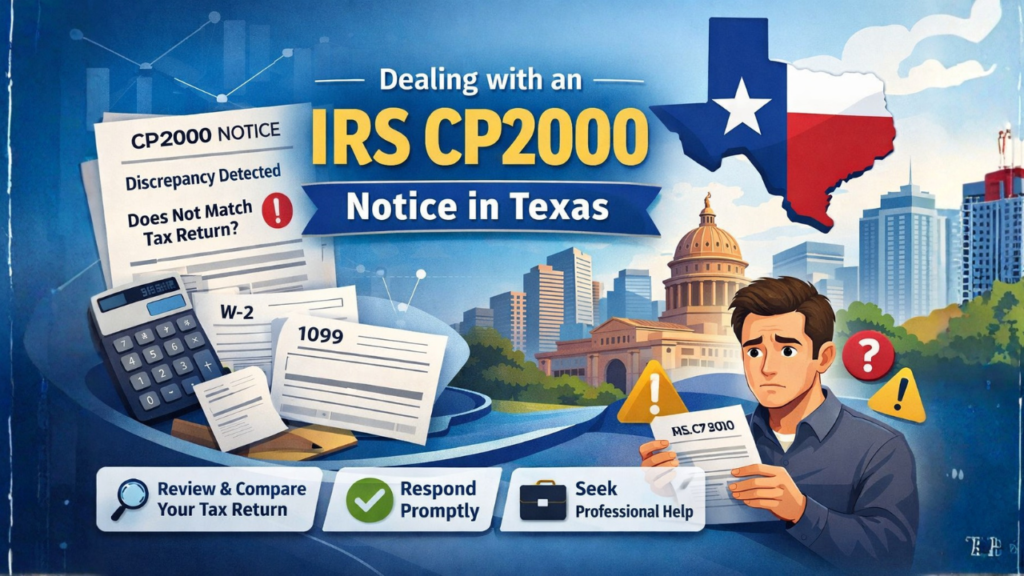
Receiving an IRS CP2000 notice in Texas can be stressful, especially if you’re unfamiliar with the process. If the information on your tax return doesn’t match what the IRS has on file from employers, banks, or third parties, you might receive this notice. While it may be overwhelming, understanding the IRS CP2000 notice and how to handle it is key to avoiding penalties and confusion. This guide will walk you through the notice’s significance, how to respond, and how to manage it effectively in Texas.
Understanding IRS CP2000 Notices in Texas
An IRS CP2000 notice informs you of discrepancies between the income or other information reported on your tax return and what the IRS has in its records. This notice is not a bill or an audit but rather an opportunity to correct errors. If you left off a W-2 or reported incorrect dividend amounts, this could trigger the notice. In Texas, it’s important to address these discrepancies quickly to prevent further complications, including penalties and interest.
The Importance of Addressing IRS CP2000 Notices in Texas
It’s crucial to understand the implications of a CP2000 notice, as failure to address it can lead to greater financial strain. For example, if the IRS notices a mismatch involving stock sales, they may assume the income is correct, leading to additional taxes, interest, and penalties. Another scenario might involve unreported freelance income. Ignoring these situations could escalate the financial burden.
Whether it’s parental credits or misfiled dividends, timely action can prevent unnecessary penalties. Many of these issues can be corrected without incurring additional costs if addressed quickly.
Key Points to Remember:
-
This notice is your chance to correct discrepancies.
-
Ignoring it may lead to increased penalties and interest.
-
Clear communication with the IRS can resolve misunderstandings.
Helpful Tips for Managing IRS Notices in Texas
-
Contact a Tax Professional: Seek professional advice as soon as you receive a CP2000 notice. A tax expert can help you understand your options and obligations.
-
Review the Notice: Carefully compare the IRS notice with your filed tax return to spot discrepancies.
-
Gather Your Documents: Ensure you have all relevant documents like W-2s, 1099s, or other third-party statements that support your tax filing.
-
Contact the IRS: If you need clarification, reach out to the IRS or consult with a tax professional for assistance.
Step-by-Step Guide for Handling IRS CP2000 Notices in Texas
-
Review the Notice Thoroughly: Carefully examine the notice to identify discrepancies between your tax return and the IRS’s information.
-
Collect Supporting Documents: Gather documents that support your original filing, such as W-2s, 1099s, or any other third-party records.
-
Respond Promptly: Follow the instructions on the notice and submit the necessary documentation within the deadline.
-
Consider Professional Help: If you’re unsure how to respond, consulting a tax professional can simplify the process and ensure your response is accurate.
Expert Advice for Efficiently Handling IRS CP2000 Notices in Texas
To avoid complications, consider the following strategies:
-
Respond on Time: Always reply before the deadline to prevent further issues.
-
Be Clear and Concise: Explain why you believe the discrepancies are correct or incorrect in a straightforward manner.
-
Provide Documentation: Attach all required supporting documents when responding.
-
Consult a Professional: If you’re unsure how to proceed, a tax professional can ensure your response is handled correctly.
Common Questions About IRS CP2000 Notices in Texas
What should I do if I agree with the IRS CP2000 notice?
Follow the notice’s instructions, confirm your agreement, and submit any payment if required.
Can a CP2000 notice lead to an actual audit?
While audits are rare, unresolved or complicated CP2000 notices might lead to further inquiries.
What happens if I don’t respond to the notice in Texas?
Failing to respond will result in the IRS automatically adjusting your return and billing you for additional taxes, penalties, and interest.
Is receiving a CP2000 notice common?
Yes, many taxpayers receive CP2000 notices annually due to minor discrepancies or misreported income.
How long do I have to respond to a CP2000 notice?
Typically, you have 30 days from the notice date to respond, but check your notice for exact timelines.
How IRSProb.com Can Assist Clients in Texas
At IRSProb, we understand how overwhelming tax discrepancies can be. Our experienced team provides comprehensive support, helping you navigate IRS processes with confidence. We analyze your specific situation, prepare accurate documentation, and communicate effectively with the IRS. By providing thorough and proactive support, we help Texans resolve tax issues efficiently and avoid additional penalties.
Choosing the Right Professional to Handle Your IRS CP2000 Notice
Ensure your tax advisor or attorney has specific experience dealing with IRS disputes, especially CP2000 notices, for the best representation.
Concise Recap of IRS CP2000 Notices in Texas
Dealing with an IRS CP2000 notice in Texas requires prompt action and clear communication.
-
Review the notice and respond on time to avoid further complications.
-
Professional guidance can help resolve discrepancies effectively.
-
Accurate documentation is crucial to minimizing additional penalties.
Takeaways
In conclusion, receiving an IRS CP2000 notice in Texas requires prompt and accurate action to avoid additional penalties or interest. According to the IRS, a CP2000 notice is an informational letter, not an audit or bill, and it provides taxpayers an opportunity to correct discrepancies between their tax return and IRS records. To resolve the issue, carefully review the notice, compare it with your filed tax return, gather supporting documents, and respond within the 30-day timeframe. Failure to respond or address the discrepancies can result in the IRS automatically adjusting your return and issuing additional taxes, interest, and penalties. Consulting with a tax professional can help ensure a proper response and timely resolution.