When it comes to tax planning, business structure plays a vital role. For many small business owners, electing S Corporation status offers valuable tax benefits. But what exactly does it mean to be an S Corporation, and what responsibilities come with it? Here’s a breakdown to help you understand the ins and outs of S Corporations and how this structure could benefit your business.
What is an S Corporation?
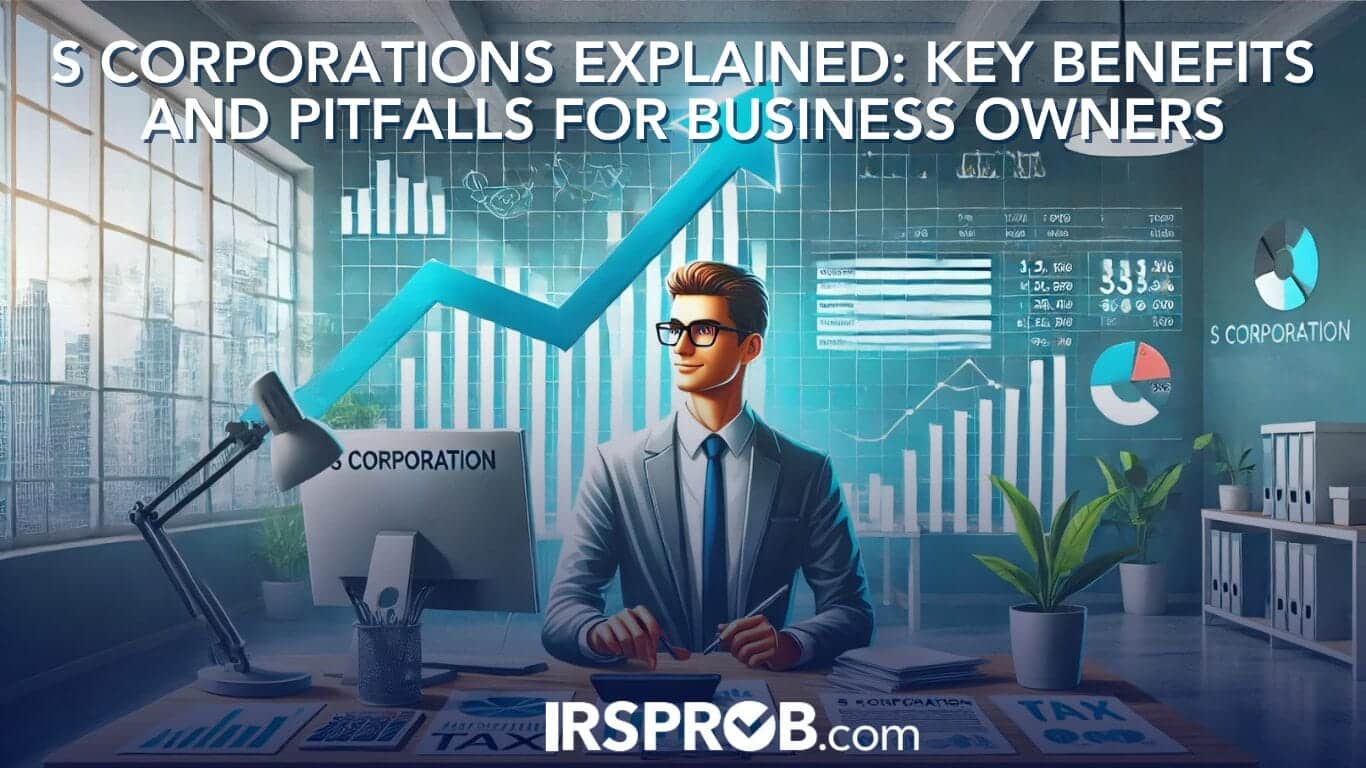
An S Corporation (S Corp) is a type of corporation that allows income, losses, deductions, and credits to pass through to its shareholders for federal tax purposes. Shareholders report the flow-through of income and losses on their personal tax returns and are taxed at their individual rates. This eliminates the issue of double taxation, which is commonly faced by C Corporations, where income is taxed at both the corporate and shareholder levels.
For a corporation to qualify as an S Corporation, it must meet the following criteria:
- Domestic Corporation: It must be a domestic entity.
- Eligible Shareholders: Only individuals, certain trusts, and estates can hold shares. Partnerships, other corporations, and non-resident aliens are not allowed to be shareholders.
- Limit of 100 Shareholders: The corporation cannot have more than 100 shareholders.
- One Class of Stock: The corporation can only have one class of stock.
- Ineligible Corporations: Certain financial institutions, insurance companies, and domestic international sales corporations cannot elect S Corporation status.
To become an S Corporation, the business must file Form 2553, signed by all shareholders, with the IRS.
Corporate Formalities and the Corporate Veil
One of the biggest benefits of forming a corporation is the liability protection it offers. However, for this protection to remain intact, corporate formalities must be strictly observed. This includes maintaining a separate legal entity and not mingling personal and corporate finances. Failure to do so can lead to a court “piercing the corporate veil,” meaning shareholders could be held personally liable for the corporation’s debts or obligations.
Reasonable Wages and IRS Scrutiny
If you’re a shareholder who also performs work for the S Corporation, you must pay yourself reasonable wages. The IRS takes this very seriously. Shareholders often attempt to minimize payroll taxes by reducing wages and increasing distributions, but this can result in unwanted IRS attention. If the IRS finds that wages are unreasonably low, they may reclassify part of the distribution as wages, leading to back taxes and penalties.
Advantages and Disadvantages of an S Corporation
Like any business structure, S Corporations come with both pros and cons.
Advantages:
- Liability Protection: Like a C Corporation, an S Corp protects shareholders from personal liability.
- Pass-Through Taxation: There’s no corporate-level tax. Instead, income or losses are passed directly to shareholders and taxed at individual rates, avoiding double taxation.
- Net Operating Losses (NOLs): NOLs flow through to shareholders, which can offset other income on their individual tax returns.
- Self-Employment Tax Savings: Shareholder distributions are not subject to self-employment tax, though reasonable wages must be paid.
Disadvantages:
- Limited Stock Classes: S Corporations can only have one class of stock, which means that all shareholders must have equal rights to distributions.
- Debt Basis Limitations: Shareholders can only increase their basis by directly loaning money to the S Corporation, limiting their ability to deduct losses.
- Fringe Benefit Restrictions: Shareholders owning more than 2% of the company are treated like partners, limiting the availability of certain tax-free fringe benefits.
Common Missteps and How to Avoid Them
- Misclassification of Income: The IRS requires that S Corporation shareholders who provide services to the company must be treated as employees and receive reasonable compensation. Failing to do this can trigger IRS audits and reclassification of distributions as wages.
- Corporate Formalities: Many business owners neglect the formalities required to maintain an S Corporation, such as holding regular board meetings or maintaining separate bank accounts. This opens the door to legal challenges and loss of liability protection.
- Employment Taxes: S Corporations are required to file Form 941 for payroll taxes and Form 940 for federal unemployment taxes. Failure to comply with payroll tax requirements can lead to penalties and interest.
Understanding Built-In Gains and Passive Income Tax
While S Corporations avoid double taxation, they may be subject to tax on certain built-in gains and passive income if they were previously a C Corporation or acquired C Corporation assets. This tax can be minimized or avoided through careful tax planning, such as waiting out the recognition period for built-in gains.
Conclusion: Is an S Corporation Right for You?
The S Corporation structure offers numerous benefits, particularly in terms of tax savings and liability protection. However, it requires adherence to strict rules and corporate formalities. Before choosing S Corporation status, consider your business needs, the types of shareholders you have, and whether you are prepared to comply with the tax and legal requirements.
For business owners looking to balance tax efficiency with liability protection, the S Corporation may be the right choice. Proper planning and compliance are essential to maximize the benefits and avoid pitfalls.